

Choosing between a two-stroke and a four-stroke engine for a UAV starts with the work the engine must do. Compare the output you need, the complete installation and the fuel required for the mission. The number of strokes alone cannot tell you which engine will suit your aircraft.
Both architectures belong in that comparison. Löweheiser EFI can be adapted to existing two-stroke and four-stroke engines in the 10–500 cc range. Whether the adaptation for your exact engine is already developed or needs development is a separate question.
Start with the installed system
An engine specification is only part of the mass and packaging calculation. Include the intake and exhaust, fuel system, ignition and ECU, mounting hardware, cooling arrangements and any starter or generator. Then add the fuel and lubrication supplies needed for your intended operating time.
Compare engines at the required output and operating speed. A lighter bare engine can lose its advantage once you account for the complete installation and fuel carried. Likewise, a larger displacement does not establish how much useful output you will obtain at your chosen operating point.
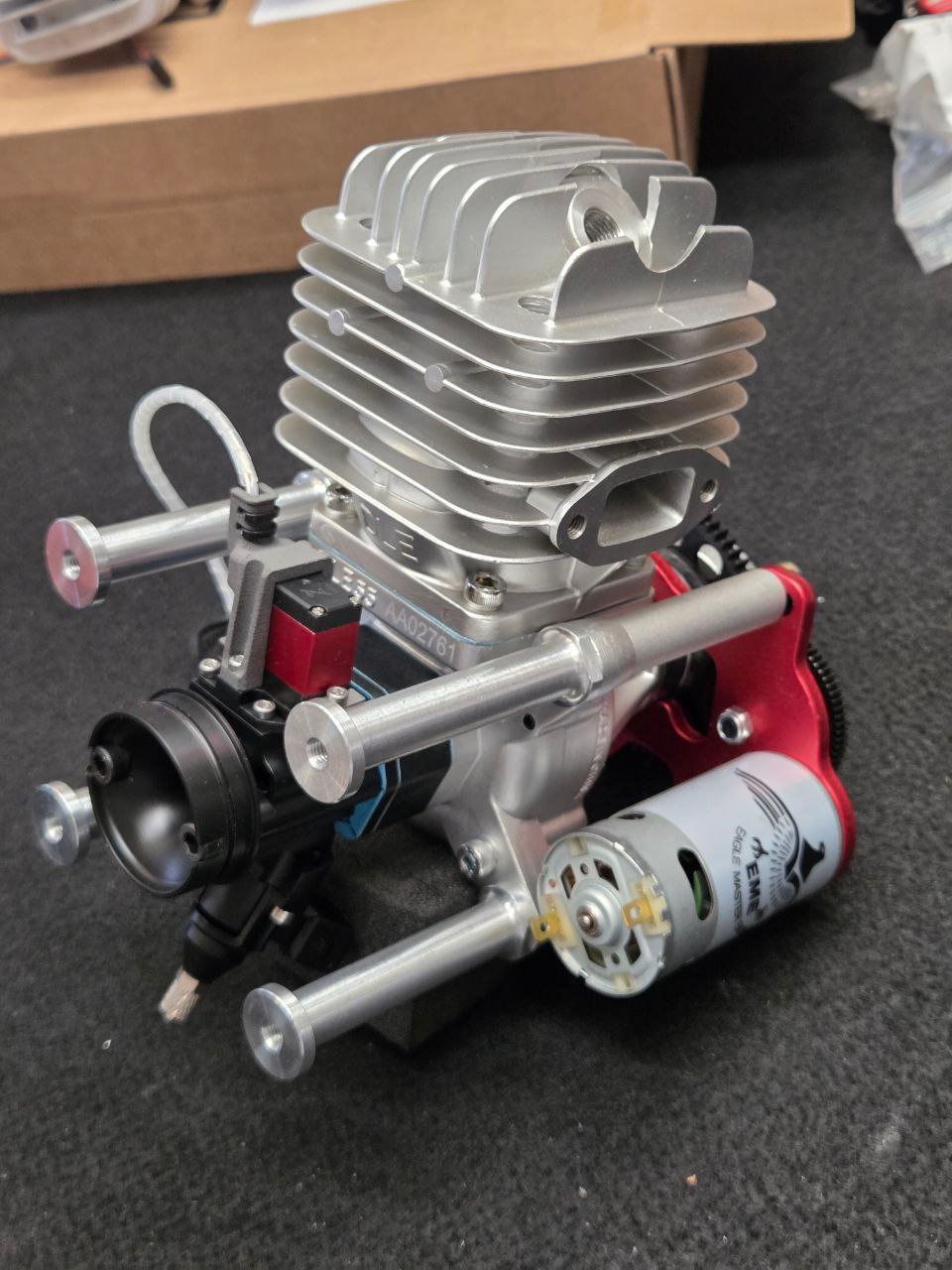
Lubrication depends on the engine design
Do not assume that every four-stroke uses a separate oil sump, or that one oil-to-fuel ratio applies to every two-stroke. The actual engine manual determines the lubrication arrangement and approved lubricant.
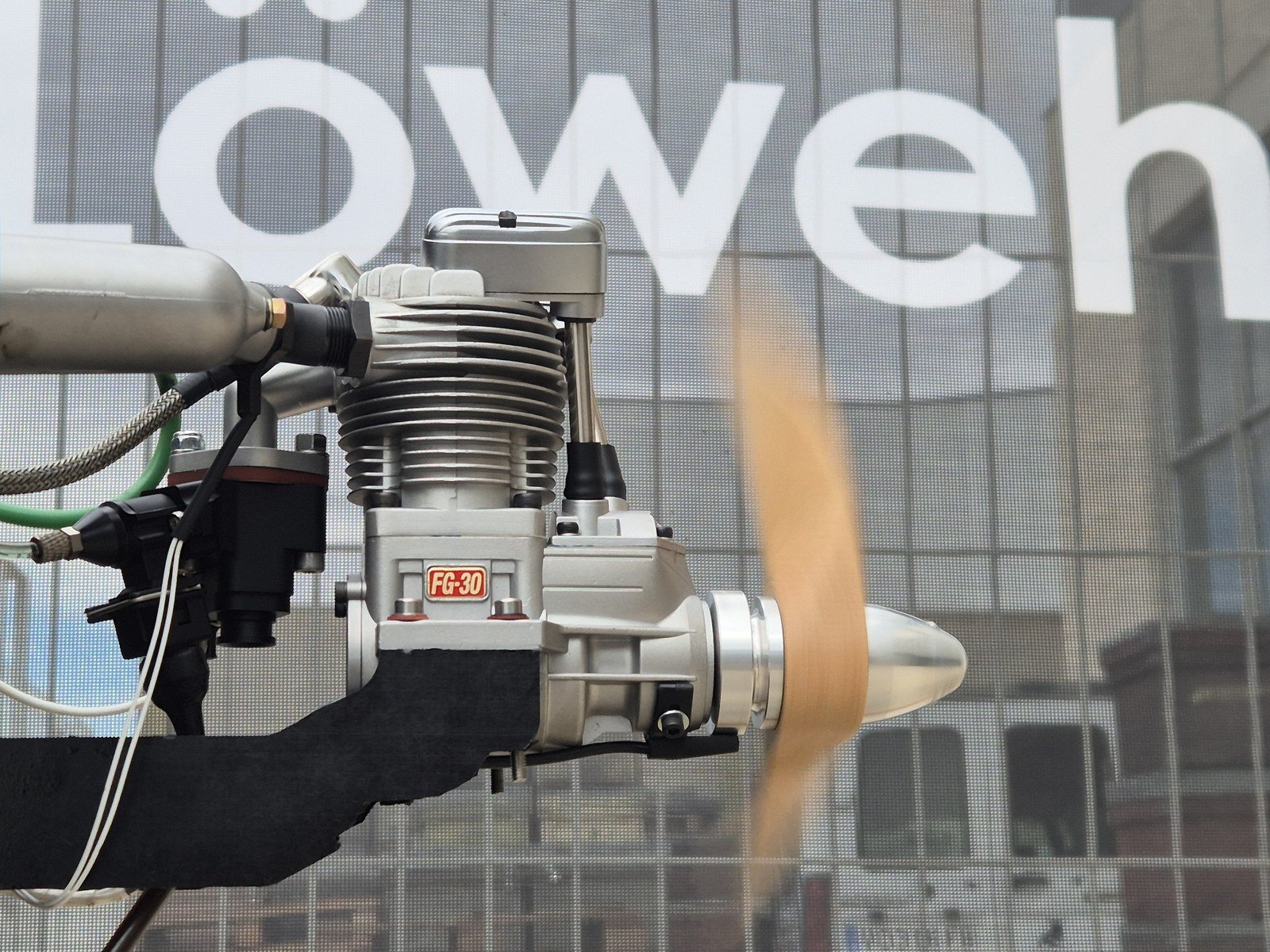
For example, the SAITO FG-30B manual specifies gasoline mixed with two-stroke oil, even though the engine is a four-stroke. Honda’s GX35 uses a different arrangement, with an engine-oil reservoir and a rotary-slinger lubrication system. These are examples of individual designs, rather than rules for either engine category. See the SAITO FG-30B instructions et Honda’s GX35 design description.
When you add EFI, retain the lubrication provisions required by the engine. Fuel-system changes and calibration must account for that arrangement; electronic fuel metering does not remove the engine’s lubrication requirements.
Build maintenance into the operating plan
Inspect the maintenance schedule before selecting an engine. Consider the tasks, their intervals, the access needed in the aircraft and the time required to complete them. A service item that is simple on an open bench may need a different installation layout to remain practical in a UAV.
Valve inspection is a useful example. The SAITO FG-30B instructions include valve-clearance checks after break-in and at the manufacturer’s specified intervals, with the engine cold. These requirements belong to the individual model and manual revision. Use the manual for your exact engine when planning access and maintenance time.
A two-stroke with fewer valve-train components may have different service tasks, but component count alone does not establish reliability. Lubrication, cooling, fuel quality, calibration and the operating load all deserve attention in the maintenance and test plan.
Compare fuel consumption at the same useful output
A fuel-consumption figure needs an operating point. Record the engine speed, load, fuel and relevant test conditions, then compare the fuel used to produce the same useful output. Avoid deciding on an assumed percentage advantage for an entire engine category.
Brake-specific fuel consumption (BSFC) relates fuel flow to shaft power, commonly in g/kWh. A lower value means less fuel for each unit of shaft energy at that measured point. It does not, by itself, describe the whole operating range or prove which installation gives the longest endurance.
For a generator installation, distinguish engine shaft output from delivered electrical output, which includes conversion losses. Keep the measurement boundary consistent between candidates. Our BSFC units and calculation guide explains the calculation and the information a useful comparison needs.
Use a comparison you can verify
| Decision | What to compare |
|---|---|
| Required output | Measured output at the intended speed and load. |
| Installed mass | Engine, supporting hardware, fuel and lubrication supplies. |
| Fuel use | Matched output, stated conditions and the same measurement boundary. |
| Maintenance | Model-specific tasks, operating-hour intervals and installation access. |
| EFI adaptation | Existing adaptation status, required development and engine-specific calibration. |
Keep your engine. Plan the EFI adaptation.
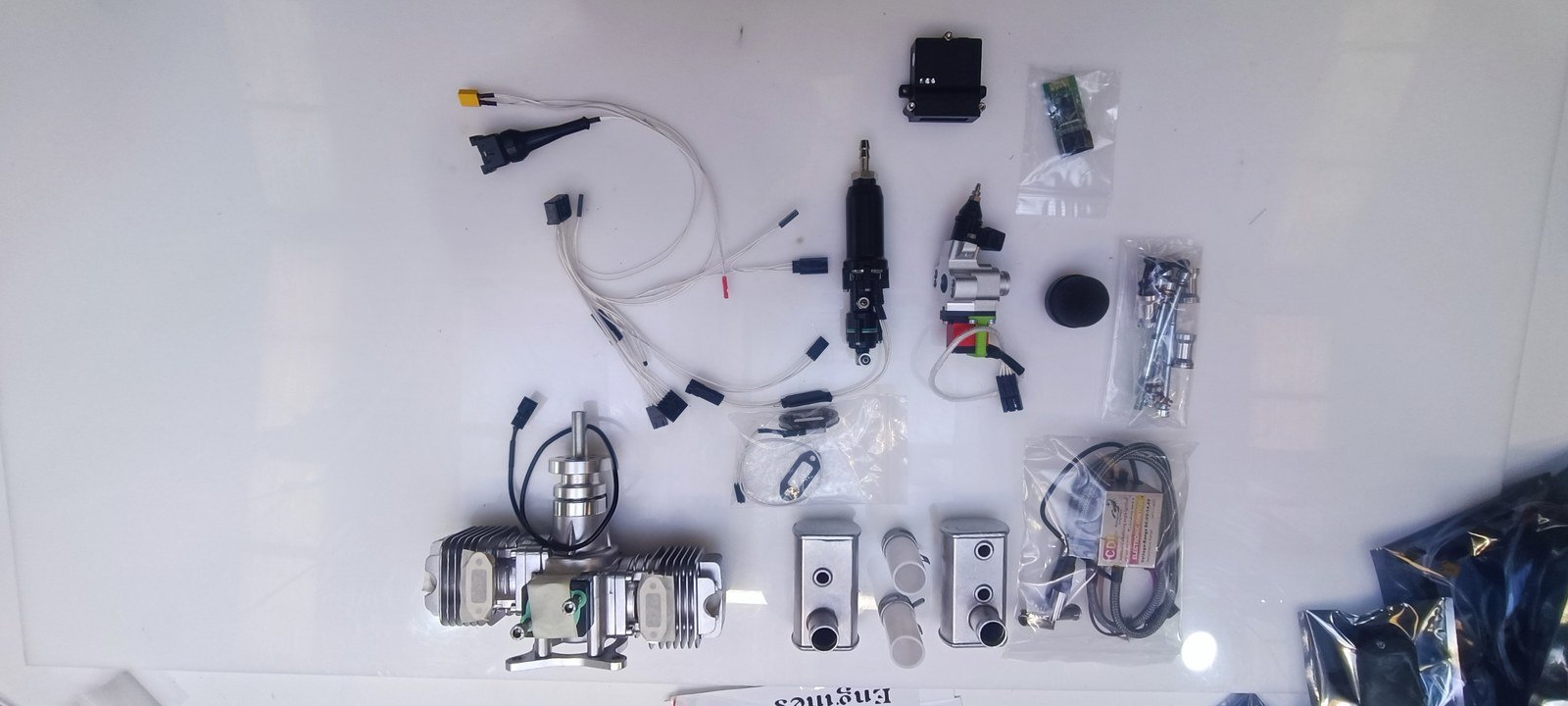
You do not need to begin by replacing an engine that suits your installation. Löweheiser develops EFI adaptations for existing engines, as well as engine solutions. The selection should follow the operating requirements and the evidence available for each candidate.
For an EFI enquiry or quotation, email info@loweheiser.com with your engine’s make, model and displacement. The team can confirm the status of the specific adaptation and prepare a quotation.
 French
 English
 German